Your Backups Exist. That Does Not Mean They Work.

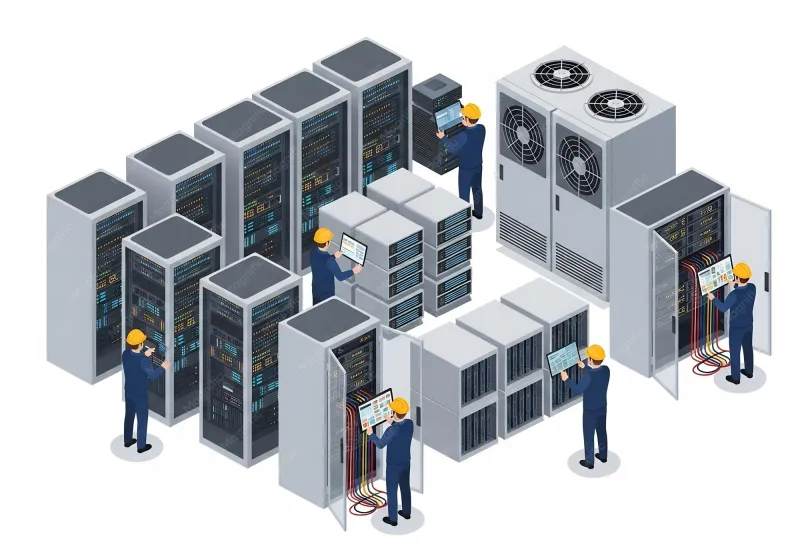
Photo: data backup server room disaster recovery business continuity, via blizit.com
At some point in the last year, someone at your organization checked a box. Backups: enabled. Retention policy: configured. Offsite replication: active. The documentation was filed, the vendor confirmed the setup, and the topic moved off the agenda. What did not happen — at most companies — was anyone actually attempting to restore from those backups under conditions that resemble a real incident.
That distinction is the difference between a recovery strategy and a recovery story you tell yourself.
The Confidence That Comes from Never Being Tested
There is a specific kind of organizational confidence that accumulates around untested systems. Because the backup infrastructure has never visibly failed, it acquires a reputation for reliability it has not actually earned. IT teams point to monitoring dashboards showing successful backup jobs. Leadership references the disaster recovery section of the compliance documentation during audits. Everyone operates on the reasonable-sounding assumption that a system which has not broken must be working.
This reasoning is structurally flawed when applied to backup and recovery. A backup job completing successfully confirms only that data was written somewhere. It says nothing about whether that data can be read back, whether it is internally consistent, whether the restoration tooling still functions against the current version of the application, or whether the process can be executed within a timeframe that keeps the business operational.
The failure mode is not that backups stop running. The failure mode is that they run faithfully for years, producing artifacts that cannot actually be used.
What US Businesses Discover During Real Incidents
The pattern that emerges from actual incident post-mortems is remarkably consistent across industries and company sizes. When a genuine data loss event occurs — ransomware encryption, accidental deletion, storage hardware failure, database corruption — the recovery attempt surfaces problems that had been quietly accumulating for months or years.
Database dumps that were taken without locking transactions contain inconsistencies that prevent clean restoration. Backup files that were compressed with a tool no longer installed on any server in the environment. Restoration procedures documented by an engineer who left the company two years ago, referencing infrastructure that has since been decommissioned. Backup storage buckets with permissions so restrictive that the recovery system cannot authenticate against them during an incident — when the normal authentication workflow is itself unavailable.
None of these failures appear on a monitoring dashboard. They are invisible until the moment they become catastrophic.
The Hidden Cost Calculation Nobody Runs
US businesses tend to evaluate backup infrastructure through a cost lens that captures only one side of the ledger. Storage costs, licensing fees, and administrative overhead are visible line items. The cost of a failed recovery is not budgeted because it is treated as a hypothetical.
Consider what an extended outage actually costs an organization operating in a competitive market. Revenue loss during downtime is the obvious figure, but it is rarely the largest one. Regulatory exposure for businesses operating under HIPAA, PCI-DSS, or state-level data protection frameworks can generate penalties that dwarf the operational revenue impact. Customer attrition following a publicized data incident has a long tail that standard incident cost models typically undercount. The staff hours consumed by an unplanned recovery effort — pulling engineers away from every other priority for days — represent a resource cost that never appears in the post-incident financial summary.
The investment required to validate your backup infrastructure is modest relative to any one of these potential outcomes. The reason most organizations do not make that investment is not cost — it is that the failure has not happened yet, and untested confidence is comfortable.
The Difference Between a Backup and a Recovery Capability
A backup is a copy of data. A recovery capability is the demonstrated ability to restore that data to a functional state within a defined timeframe. These are not the same thing, and treating them as equivalent is the foundational error in most disaster recovery programs.
Building an actual recovery capability requires answering questions that backup configuration alone cannot answer. How long does a full restoration actually take, measured against real data volumes? Which personnel are required, and are they available outside of business hours? What is the correct restoration sequence for systems with interdependencies? At what point in the restoration process does the application become partially functional, and is partial functionality acceptable for business continuity purposes?
These questions have answers. But those answers can only be obtained through testing.
A Practical Validation Checklist
The following framework is not exhaustive, but it addresses the failure modes that appear most frequently in real incidents.
Conduct a full restoration test, not a file-level spot check. Restoring individual files confirms that backup storage is accessible. It does not confirm that a complete system restoration is possible. At least annually, execute a full environment restoration to an isolated staging environment and verify that the application functions correctly against the restored data.
Measure actual recovery time against your stated RTO. Recovery Time Objective is a number that appears in many disaster recovery documents. Far fewer organizations have ever measured whether their actual restoration process can meet that number. Time your restoration exercises and compare the result to your stated objective.
Validate backup integrity automatically. Backup verification should not depend on a human remembering to check. Implement automated integrity checks that attempt to read and validate backup artifacts on a scheduled basis, and alert on failures.
Document the restoration procedure for someone who was not involved in creating the backup infrastructure. If the only person who can execute a recovery is the person who built the system, you have a knowledge concentration risk that is as dangerous as a technical failure. Runbooks should be written for competent engineers who have no prior context.
Test restoration under adverse conditions. Real incidents rarely happen during business hours with full staff available and all systems functioning normally. Tabletop exercises and restoration drills should include scenarios where key personnel are unavailable, where the primary tooling is inaccessible, and where the incident itself has degraded some portion of the normal operational environment.
Verify that backup storage access is independent of the systems being recovered. Authentication mechanisms, network paths, and credential stores that exist only within the primary environment may be unavailable during the incident that requires a recovery. Backup access credentials should be stored and accessible through a path entirely separate from the infrastructure they protect.
Recovery Is an Operational Discipline, Not a Configuration State
The organizations that recover quickly from data incidents are not the ones with the most sophisticated backup tooling. They are the ones that treat recovery as a practiced operational discipline — something that is regularly exercised, continuously validated, and genuinely understood by the people responsible for executing it.
Having backups is the starting point, not the finish line. The documentation confirming that backups are configured is not evidence that your organization can recover from a serious incident. The only evidence that qualifies is a successful restoration test, conducted recently, under conditions that approximate what an actual incident looks like.
Until that test has been run, the confidence your organization has in its recovery capability is borrowed. At some point, it comes due.