Auto-Scaling Was Supposed to Save You: Why Misconfigured Policies Are Quietly Destroying Uptime

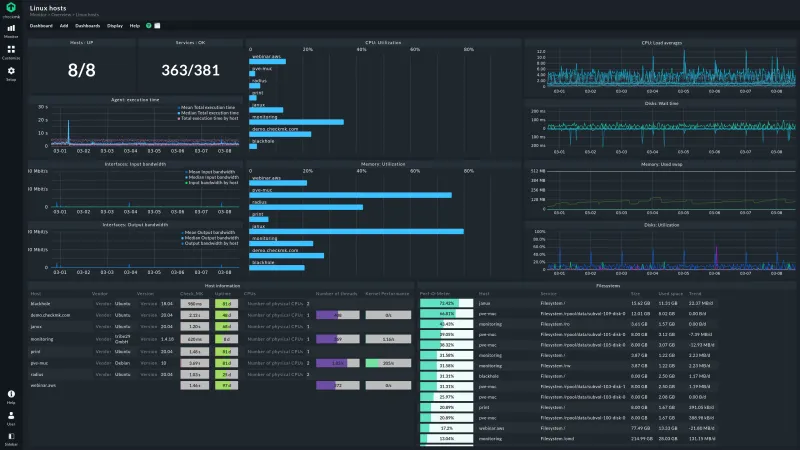
Photo: server infrastructure auto scaling cloud dashboard monitoring, via media.geeksforgeeks.org
There is a particular kind of infrastructure failure that carries an almost ironic sting: the outage caused by the system you put in place to prevent outages. Auto-scaling, one of cloud computing's most celebrated features, belongs in this category more often than most engineering teams care to admit. When configured correctly, it absorbs traffic surges gracefully. When configured poorly, it becomes a cascading failure engine — one that is difficult to diagnose precisely because the tooling appears to be working as intended.
Understanding why this happens requires looking beyond the surface-level mechanics of scale-out and scale-in events. The vulnerabilities are typically buried in the policy logic itself.
The Illusion of Automatic Protection
Auto-scaling creates a reasonable assumption: more demand triggers more capacity, the system stabilizes, and users experience no degradation. That assumption holds under textbook conditions. Production environments, however, are rarely textbook.
The first problem is that scaling decisions are reactive by design. A scaling policy responds to a metric threshold — CPU utilization, request queue depth, memory consumption — only after that threshold has already been crossed. In high-velocity traffic spikes, the time between threshold breach and new instance availability can be measured in minutes. During a sharp demand surge, that window is precisely when users are experiencing the worst performance. The scaling event arrives late, like reinforcements after the battle has already been lost.
This latency is not a bug; it is an architectural reality. What transforms it into a systemic vulnerability is when teams design policies that assume instantaneous capacity delivery.
Aggressive Thresholds and the Stampede Problem
One of the most common misconfigurations involves setting scale-out thresholds too aggressively. An organization sets its CPU trigger at 60 percent utilization, reasoning that spinning up additional instances early will prevent saturation. What actually happens is subtler and more damaging.
When multiple instances simultaneously hit 60 percent CPU — a common scenario during coordinated traffic events — the auto-scaler launches a large batch of new instances at once. Each new instance needs to initialize: pull container images, establish database connection pools, warm application caches, register with load balancers. During this initialization window, those instances are consuming resources without contributing meaningful capacity. If the underlying infrastructure is already under pressure, this initialization load can push the system past a tipping point.
The result is a paradox: the scaling event itself becomes a contributing cause of the degradation it was meant to resolve. Teams reviewing logs afterward see scaling activity and assume the system responded correctly. They rarely question whether the scaling response accelerated the failure.
Cooldown Periods: The Configuration Detail That Costs Millions
Cooldown periods — the intervals during which a scaling policy pauses between successive actions — exist precisely to prevent thrashing. A well-tuned cooldown gives newly launched instances time to become productive before the policy evaluates whether additional capacity is needed.
When cooldown periods are too short, the scaler continues adding instances against metrics that have not yet reflected the new capacity. The result is over-provisioning at best and resource contention at worst. When cooldown periods are too long, the policy becomes unresponsive to sustained load increases, sitting idle while the system degrades.
Neither extreme is obvious from a dashboard view. Both produce outages. The correct cooldown value is not a universal constant — it depends on instance initialization time, application warm-up behavior, and the specific metrics being tracked. Organizations that copy default values from documentation and never revisit them are operating with an unvalidated assumption at the center of their reliability strategy.
Resource Contention and the Database Bottleneck
Auto-scaling is typically applied to application and web tiers. Databases, by contrast, are frequently left outside the scaling architecture — either because they are harder to scale horizontally or because the team has not yet encountered the failure mode that makes this gap dangerous.
As application instances multiply, each one opens its own set of database connections. A database server that was appropriately sized for twenty application instances may face connection exhaustion when the auto-scaler expands that tier to eighty instances during a traffic event. The database becomes the bottleneck, application instances begin queuing requests, and response times climb. The auto-scaler, observing elevated CPU and latency metrics, interprets this as a signal to add more application instances — which adds more database connections — which makes the bottleneck worse.
This feedback loop is one of the cleaner examples of how auto-scaling can actively amplify a failure. The application tier scales perfectly. The database tier collapses under the weight of that success.
A Diagnostic Framework for Finding the Hidden Vulnerabilities
Addressing these risks requires a structured audit of existing scaling configurations, not simply a review of whether scaling policies are enabled.
Validate initialization time against cooldown settings. Measure how long a new instance actually takes to become fully productive under load — not just healthy from a health-check perspective, but genuinely serving traffic at acceptable latency. Cooldown periods should exceed this measurement with margin.
Map every downstream dependency. For each service tier covered by auto-scaling, document the resources that tier consumes from layers below it: database connection limits, cache server capacity, external API rate limits, shared storage throughput. Simulate the resource demand at maximum scaled capacity and verify that downstream systems can absorb it.
Test scaling events under synthetic load before production exposure. Load testing frameworks should include scenarios that deliberately trigger scaling events. Observe whether the scaling response stabilizes or destabilizes the system. This is the only reliable way to validate that policy logic behaves as intended under real conditions.
Audit scale-in policies with the same rigor as scale-out. Premature scale-in during traffic that is still elevated — or scale-in that removes instances before session state has been properly drained — creates its own class of user-facing failures. Both directions of scaling carry risk.
Implement predictive scaling for known traffic patterns. If your workload has predictable peaks — business hours, scheduled batch jobs, recurring promotional events — reactive scaling will always be late. Proactive capacity expansion based on historical patterns removes the latency problem from the equation for a significant portion of your risk surface.
The Configuration That Never Gets Revisited
Perhaps the most operationally honest observation about auto-scaling failures is this: most of the misconfigured policies in production today were configured correctly for the system that existed when they were written. Infrastructure changes. Traffic patterns evolve. Application behavior shifts with each deployment. Scaling policies written eighteen months ago may be entirely wrong for the system running today.
Treating auto-scaling configuration as a one-time setup task is a governance failure as much as a technical one. Policies should be reviewed on a defined schedule and after any significant architectural change. The infrastructure that hosts your business deserves the same change management discipline applied to the application code running on it.
Auto-scaling remains one of the most valuable tools available for maintaining uptime under variable load. The goal is not to distrust it — it is to configure it with the same rigor you would apply to any other critical system component. The failures are not inevitable. They are, almost without exception, the product of assumptions that were never tested.