Paying for Power You Don't Need: The Database Inefficiency Tax on Your Hosting Bill
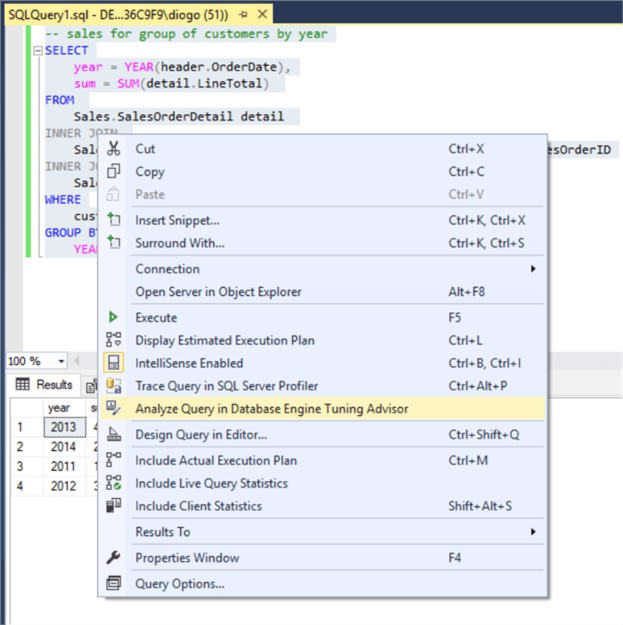
Photo: database server query performance optimization code analysis, via www.mssqltips.com
There is a familiar pattern that infrastructure teams encounter far too often. An application begins to slow. Page load times creep upward. Support tickets accumulate. The instinctive response is to provision a larger server, upgrade to a higher-tier hosting plan, or add memory to an already strained environment. Costs rise. The problem temporarily subsides — and then returns.
What rarely gets examined in that cycle is the application itself. Specifically, the database layer.
For a significant portion of US businesses running web applications, the hosting bill is not a reflection of genuine resource demand. It is, in practical terms, a penalty for unresolved database inefficiency. The infrastructure is absorbing the consequences of code that was never fully optimized.
The Quiet Compounding of Inefficient Queries
Database queries are the connective tissue of any dynamic web application. Every product listing, every user session lookup, every dashboard metric involves one or more calls to a database. When those calls are written poorly — or when the database schema was never designed with scale in mind — the cost accumulates quietly.
Consider a straightforward e-commerce scenario. A product catalog page loads fifty items. If the application fetches each item's associated metadata — category labels, inventory counts, vendor names — as a separate query, that single page load might trigger fifty-one database calls instead of one. This is the N+1 query problem, and it is extraordinarily common in applications built under deadline pressure.
At low traffic volumes, the impact is negligible. But as concurrent users increase, those redundant queries stack. The database server strains under a load that a well-structured JOIN query would have handled in a fraction of the time. CPU utilization spikes. Response times degrade. The monitoring dashboard lights up, and someone opens a ticket to upgrade the hosting plan.
The upgrade helps — temporarily. But the underlying inefficiency remains untouched, and the business is now paying more each month to mask a problem that a competent database review might resolve in a matter of hours.
Indexing Gaps and the Cost of Full Table Scans
Beyond query structure, indexing strategy — or the absence of one — is among the most consistent drivers of unnecessary infrastructure spend.
When a database query filters or sorts data on a column that lacks a proper index, the database engine must scan every row in the table to find matching records. On a table with ten thousand rows, this is inconvenient. On a table with ten million rows, it is catastrophic for performance.
A SaaS company operating in the US market recently conducted an internal audit after noticing that their primary database server was consistently pegged at high CPU utilization during business hours. The engineering team assumed the workload had simply outgrown their current tier. After running query analysis tools — including the EXPLAIN command available in both MySQL and PostgreSQL — they identified three queries executing full table scans on tables exceeding five million records.
Adding targeted composite indexes to those three columns reduced query execution time by over ninety percent. Database CPU utilization dropped substantially. The planned server upgrade was shelved. The cost of that optimization: roughly four hours of developer time.
Schema Design Debt and Its Infrastructure Consequences
Application databases are often built incrementally. Early-stage startups ship fast, defer optimization, and accumulate what engineers call schema design debt — structural decisions that made sense at launch but become liabilities at scale.
Denormalized tables, missing foreign key constraints, columns storing serialized data that should be relational — these are architectural patterns that make queries expensive. An application that stores JSON blobs in a single column to avoid creating proper relational tables, for instance, forces the database to deserialize and parse that data at query time rather than retrieving indexed values directly.
This kind of technical debt does not announce itself. It grows quietly, and its most visible symptom is often an infrastructure bill that seems disproportionate to the actual user base.
Practical Diagnostics: Finding the Waste Before You Pay for More
The good news is that database inefficiency is discoverable. Most modern database systems and hosting environments provide tooling to surface the problem without requiring extensive manual investigation.
Query profiling is the most direct starting point. Tools like MySQL's slow query log, PostgreSQL's pg_stat_statements extension, and application-level profilers such as New Relic or Datadog can identify which queries consume the most time and resources. Sorting by cumulative execution time — not just the slowest individual query — often reveals the highest-impact opportunities.
EXPLAIN plan analysis should be standard practice for any query touching large tables. These execution plans reveal whether the database is using indexes, performing full scans, or executing nested loops that suggest an N+1 pattern.
Connection pool monitoring is another underutilized diagnostic. When an application opens more database connections than the server can efficiently manage, latency increases across all queries. This is frequently misread as a hosting capacity problem when it is actually an application configuration issue.
ORM audit reviews are particularly valuable for teams using object-relational mapping frameworks. ORMs abstract SQL generation, which is convenient but can produce deeply inefficient queries that developers never directly inspect. Logging the raw SQL output during a load test often reveals surprising redundancy.
What the Numbers Actually Look Like
The financial case for database optimization over infrastructure scaling is compelling when examined directly.
A mid-tier managed database instance appropriate for a growing US startup might cost several hundred dollars per month. Upgrading to the next tier to accommodate growing query load could add another two to four hundred dollars monthly. Over a year, that upgrade costs three to five thousand dollars.
A focused database optimization engagement — whether conducted internally or through a contracted database engineer — might resolve the underlying inefficiency in one to three days of work. At typical US consulting rates, that is a one-time expenditure that eliminates a recurring monthly cost.
The return on investment is not subtle. Yet the optimization path is consistently deferred because the symptoms look like an infrastructure problem.
Aligning Infrastructure Spend with Actual Demand
At HostInPlace, we work with businesses across a wide range of industries and scales. A consistent pattern we observe is that companies operating on appropriately sized infrastructure — neither over- nor under-provisioned — have almost always invested meaningfully in application-layer optimization.
The goal of a well-designed hosting environment is not to absorb inefficiency at scale. It is to deliver consistent, predictable performance for workloads that have been architected responsibly. When the database layer is optimized, infrastructure costs align with genuine demand rather than compensating for preventable waste.
Before your team approves the next hosting upgrade, it is worth asking a straightforward question: has the database been profiled under real load conditions? If the answer is no, the upgrade may be premature — and expensive.
Optimization first. Scaling second. That sequence protects your budget and your infrastructure in equal measure.